
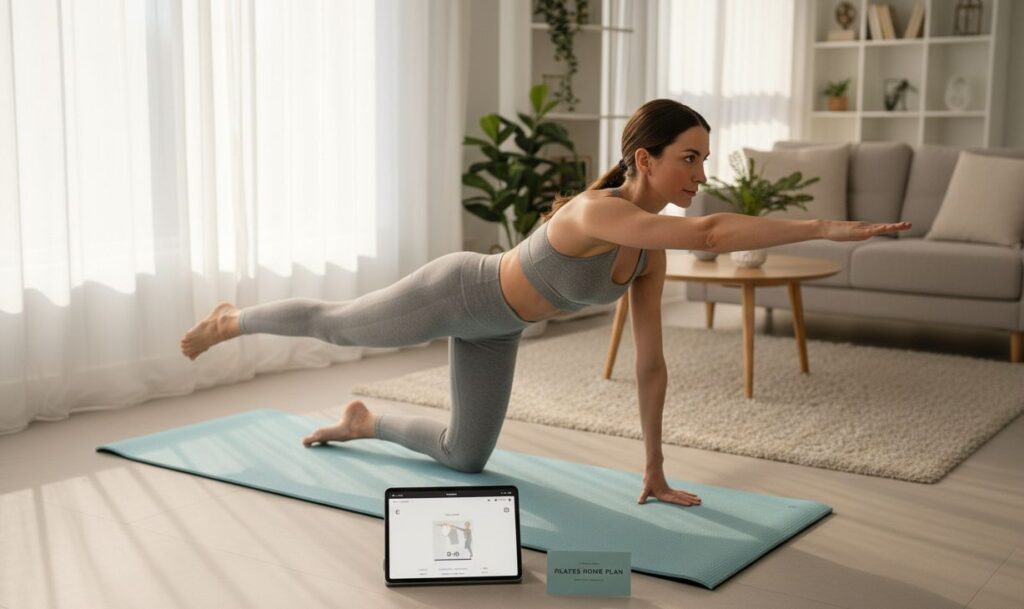
Pilates is a great way to stretch and strengthen your body, focus your mind, and get physical health benefits along with emotional benefits. No matter if you are new to working out or an old pro, the best thing about Pilates is that it can be practiced at home. No expensive gym memberships or high-end equipment necessary! All you need is a mat, some dedication and a game plan.
Can Pilates Work at Home?
Yes, Pilates can be as effective at home as it is in a studio. Actually, many end up finding that the accessibility of at-home practice allows them to stay more committed to regular workouts.
Pilates classes at the studio typically involve equipment such as reformers and resistance bands, but you can get many of the same benefits at home with a good Pilates workout plan that focuses solely on your body weight and a mat.
Consistency hasproduct, works wonders and continued training does the rest. Together in an organized program, you can use Pilates to help strengthen your body, increase flexibility and even improve posture.
Key Benefits of Home Pilates:
- Flexibility Work out whenever it works for you.
- Affordable: No expensive gym memberships or home fitness equipment.
- Personalised Pace: Guide through exercises at the right rate for you.
Can I Do Pilates at Home Alone?
Absolutely! One of the most accessible and flexible exercises, Pilates is ideal for at-home practice. Whether you choose to watch online videos or develop your own routines, Pilates is something that can be easily done on its own.
But if you’re unfamiliar with the exercises, getting started on your own can be intimidating. Like many things in life, the secret is to be consistent, and have a basic understanding of Pilates movements.
If you’re a beginner, learning key moves such as the Pilates Hundred, Roll Up and Single-Leg Stretch is highly recommended. These moves will help strengthen your core, and give you the confidence to try other challenging workouts.
You have to pay attention to form, breath, and controlled movements. Pilates is not about momentum: It’s all about precision and focus. No rush and make sure you’re doing the move right so you don’t get hurt.
Practical Tip: Not sure if you’re in perfect form?_mirror or videotape yourself to watch your posture and alignment. Otherwise, you could train with online Pilates instructors who have live classes for direction.
What Is a Good 7-Day Home Workout Plan?
Formulating a well-rounded Pilates routine can make all the difference to reap long lasting results. An effective 7-day workout plan will include a variety of exercises to work all areas of your body and give plenty recovery time. Here’s an example:
Day 1: Full-Body Pilates
- Warm-Up: 5-minute gentle stretching
- Workouts: Pilates Hundred, Roll-Up, The Saw, Leg Circles and the Spine Stretch Forward
- Cooldown: Light stretching and relaxation
Day 2: Core Focus
- Warm-Up: 5-minute gentle stretching
- Workouts: Plank, Side Plank, Singe-Leg Stretch, Double-Leg Stretch, and The Pilates Scissors
- Recover: Child’s Pose and Breathing Exercises
Day 3: Lower Body Focus
- Warm-Up: 5-minute gentle stretching
- Frog exercise shoulder bridge exercises side leg lifts side leg pulses the saw 3.
- Cool down: Stretching and deep breathing
Day 4: Upper Body Focus
- Warm-Up: 5-minute gentle stretching
- Workbook: Push-Ups, Plank with Arm Lift, The Swan, The Saw
- Cool Down: Light stretch of arms and shoulders
Day 5: Active Rest Day
- Activity: Walking lightly, yoga or slow stretching. This will give you muscles time to recover.
Day 6: Full-Body Pilates
- Warm-Up: 5-minute gentle stretching
- Workouts: The Hundred; Roll-Up; Leg Circles; Plank and Spine Stretch.
- Cooldown: Relaxed stretching
Day 7: Rest Day or Yoga
- Activity: Soft restorative yoga or just chill.
Practical Tip: If specific exercises feel too difficult on particular days, trade out those moves for something you can manage like Bridge (for lower body) or Modified Plank (for core). Pilates is always about work, just not pain!
Pilates Home Plan for Beginners
Beginning a Pilates home plan as a beginner may seem intimidating, but have no fear You have to start somewhere. The secret is to start small, and quality always trumps quantity. Here is a simple Pilates plan that’s accessible to anyone new to the practice:
Day 1: Basic Principles of Pilates
- Focus: The six basic movements of Pilates, as well as the proper form
- Workouts: The Pilates Hundred / Pelvic Curl / The Saw
- Cool down: Practice deep breathing and gentle stretches
Day 2: Core Activation
- Focus: Building foundational strength
- Single-Leg Stretch, Double-Leg Stretch, and The Roll-Up Exercises
- Cool Down: Seated spine twists, relaxed breathing
Day 3: Flexibility and Balance
- Focus: Increasing flexibility and developing balance
- Moves: Leg Circles, The Saw, and Side-Lying Leg Lifts
- Post-Workout: Hamstrings and lower back stretch
Day 4: Make it an Active Rest or Easy Yoga
- Activity: Concentrate on relaxing and light activities
Day 5: Full-Body Routine
- Focus: Utilising strength in both the upper and lower body
- Workout: Pilates Hundred, Bridge, Roll-Up and The Saw
- Cooldown: Stretching and breathing exercises
Day 6: Rest Day
Day 7: Active Rest
- Movement: Gentle stretch or relaxed stroll
Practical Tip If you are a beginner, make sure to perform every move slowly. If anything feels uncomfortable or challenging, go ahead and modify them, or simply take the time to rest.
Full-Body Pilates Home Plan
Pilates for the whole body We’re going to hit all of the major muscle groups in a way that will help you develop strength, flexibility and stamina. Here is a basic full-body program to follow:
Full-Body Pilates Workout (30-45 minutes)
- Warm-Up: 5-10 minutes of easy stretching to free the body
Exercises:
- The Hundred (Core Activation)
- Roll-Up (Flexibility)
- Single-Leg Circles (Leg Mobility)
- Torso Flexibility and Stretch USING THE SAW
- The Swan (Back Extension)
- Side Leg Kicks (Activate the Outer Thigh)
- Bridge (Glute and Core Activation)
- Cool Down: 5-10 minutes of easy stretching and relaxation
Practical Tip: If you’re short on time, choose vital exercises such as The Hundred and Bridge for an effective, efficient full body workout. These workouts hit multiple areas simultaneously, so they can all be completed in less than 20 minutes.
How To Make Your Pilates At-Home Plan A Success
- The golden rule: Stay consistent and aim for at least three or four workouts each week in order to see positive outcomes.
- Focus on the Form: It Matters! Proper alignment and movement, both to prevent injury and gain optimum benefit from your exercise.
- Use Modifications: If you’re not familiar with Pilates, grab props for support, such as resistance bands or yoga blocks.
- Pay Attention to Your Body: Don’t overreach. Pilates is supposed to feel hard, but never painful. Make sure to take stop if you’re uncomfortable.
Conclusion
There are so many amazing reasons to practice Pilates at home, it’s a fantastic workout and feels good in the body and mind. Pilates is an effective form of exercise, and whether you’re a novice or veteran practitioner, developing a Pilates home plan designed just for you is a great way to get fit, become more flexible and understand new ways to relieve stress.
Don’t forget to begin slowly, and concentrate on your form and be consistent concentrating your ab exercises. If you have a good plan and are disciplined enough to follow it, Pilates will change your body and your life for a more balanced approach to healthy living.