
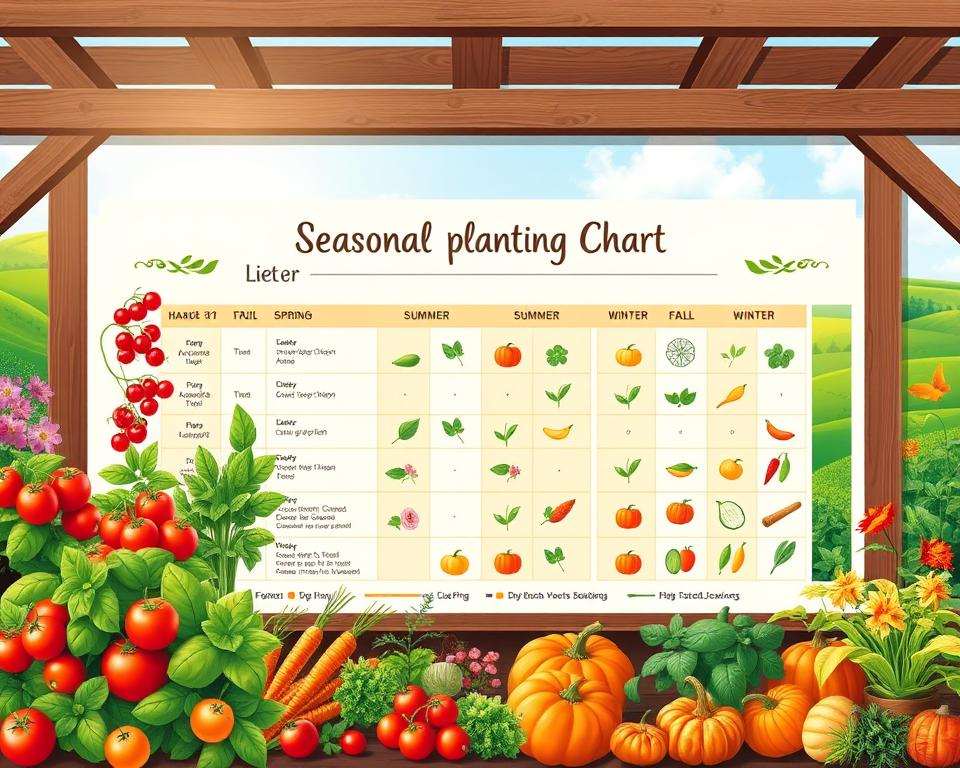
Are you optimizing your garden and the value of the plants that you grow? Charting the seasons of your plants can greatly influence the productivity and the aesthetic of your garden.
A seasonal planting chart can be an incredibly valuable asset. It can help you visualize your garden and the potential plants for each of the seasons. Our gardening infographics give detailed planting/harvesting diagrams guiding the productivity of your garden in each of the twelve months.
Understanding the appropriate plants for different seasons greatly streamlines the activities of each gardening season for a flourishing climax of crops and a more varied garden.
Key Takeaways
Maximize the garden’s productivity with critical seasonal planting.
Let the growing chart season calendar direct your planting.
Use the planting calendar illustrated in the garden infographics for a simplified planting guide.
Use the garden to improve the planted area’s life and diversity with thoughtful planting.
Gardening becomes simpler with a season chart in mind and a depression planting guide.
The Science Behind Seasonal Planting
The productivity of a garden depends greatly on the academic understanding one has regarding the gardening principles of the age and season of the planting.
Click On Read: – Stages of Gardening
Why Timing Is Critical for Garden Success
Success in gardening hinges on timing. It enables plants to flourish in the most optimal conditions. For instance, some crops must be planted at the right timing to avoid extreme weather conditions such frost and extreme heat, which can be detrimental to their yield, and affect other crops negatively. and
Climate is the most pivotal in determining the most appropriate times for planting. Various plants have evolved to endure certain temperature ranges and moisture deficits. Knowing these parameters is key to successful gardening.
How Climate and Daylight Hours Affect Plant Growth
Two important parameters that affect the growth of plants are climate and daylight hours. Plants use the lengths of day light and temperature to inform their growth cycle. For instance, certain plants are instigated to bloom by the shorter daylight hours of late summer, while other species flourish in the extended and warmer days of spring.
Climate and daylight hours influence the growth of plants. This in turn gives gardeners the opportunity to grow the best fitted plants to their conditions and to effectively time their gardening tasks. Gardeners can improve their chances of successful planting by optimizing planting times with the growth cycles of plants.
Understanding The USDA Hardiness Zones
Knowing your specific USDA Hardiness Zone and using the USDA Hardiness Zone map is a major tool for understanding what plants can survive in your region and local climate conditions for gardening successfully.
Identifying Your Zone: Dissecting The United States
The continental United States is divided into different hardiness zones based on the mean annual extreme minimum temperature. To locate your zone, one can use the USDA Plant Hardiness Zone Map for your zone or visit a local nursery or gardening website.
These zones range from 1 through 13, with Zone 1 being the coldest and Zone 13 being the warmest. Knowing your zone helps in selecting plants that are most likely to survive winter and grow well in the summer.
Breakdown Of Microclimates Within Zones
Although USDA Hardiness Zone gives one a good idea from which to base from, microclimates within a zone can influence plant growth a lot. A microclimate is the set of climate conditions of a small region or area that differ from the overall climate of the region.
Microclimates like the ones caused by changes in elevation, proximity to water, or the presence of an urban heat island make areas feel warmer or cooler than the average temperatures of the area. The effects of microclimates help make better decisions concerning.
Zone — Temperature Range (°F) — Example Cities
3 — -40 to -30 — Minneapolis, MN; International Falls, MN
6 — -10 to 0 — Portland, OR; Boston, MA
9 — 20 to 30 — Los Angeles, CA; Miami, FL
Considering the microclimates around your area along with the USDA Hardiness Zone, you are able to make better decisions concerning your garden.
Spring
Spring season for gardeners is an important time of year, because it is the time of year where they need to prepare for the growing season by having good planning. As the season heats up, there are more crops and flowers that can be planted. This allows them to make the most of the growing season.
Cool-Season Planting (March-April)
The first crops that can be planted in the spring include the hardy plant varieties: lettuce, spinach, and peas. These crops do well in the chillier temperatures (March, April) and are perfect for the spring garden. However, one should check average frost dates for their area first!
The May Planting Window
The spring season moves into May, the soil will be adequately warm, and the risk of frost is significantly less. This means that it is the perfect opportunity to start planting the warm season crops. These crops include tomatoes, peppers, and eggplants. May is also a perfect time for the planting of the flowering crops. These flowering crops include marigolds, zinnias, and sunflowers.
Indoor Starting Vs. Direct Sowing
Another common dilemma for gardeners is whether to start their seeds indoors, or to sow them directly outside in the garden. With regards to certain crops, an effective way to start the planting process is to start their seeds inside first. This is most effective with crops like tomatoes and peppers that can be started indoors for 4 to 6 weeks prior to the last frost date. However, certain crops such as beans, and cucumbers, thrive better when they are directly sown into the warmer soil of late spring.
Plant — Indoor Start — Direct Sow
Tomatoes — 4-6 weeks before last frost — After last frost
Peppers — 4-6 weeks before last frost — After last frost
Beans — No — After last frost
Cucumbers — No — After soil warms up
Gardeners can optimize their chances of a successful harvest by understanding the spring planting calendar and making educated choices about when to start seeds indoors versus when to directly sow them in the garden.
“The garden is a love song, a duet between a human being and Mother Nature.” — Jeff Cox
Using Our Superb Infographic Effectively
It is important to understand the various components of the gardening infographic to derive the greatest benefit from it. The infographic is intended to assist a gardener in navigating the intricate task of planting by season, but it can only deliver this benefit if it is used correctly.
How to Read the Seasonal Chart Symbols
Within the such infographic, the seasonal chart contains a number of symbols that communicate a message associated with planting. These symbols should be easy to understand; different icons mean different kinds of planting and different times to plant. For instance, a flower icon may be used to indicate when annuals should be planted, and a vegetable icon may be used to indicate good sowing times for other crops.
These symbols are the first thing you should understand before you start using the infographic. Recognizing the key or legend provided for the infographic helps us understand the optimal planting calendar for your garden.
Tailoring the Schedule for Your Specific Area
One of the major advantages of our gardening infographic is its customization for various areas. By comparing the chart with your local USDA hardiness zone, you are able to customize your planting calendar for your local climate. Moreover, the microclimates that your garden might have can help you to further improve your planting strategy in order to utilize the best of the growing conditions available.
Digital and Printable Versions: Advantages and Disadvantages
Our illustration comes in both digital and printable formats, and both have advantages. The digital version is available for you to carry on your smartphone or tablet, making it easier to refer to in the garden, and it can be updated with new content with no hassle. In contrast, the printable version provides you with a resource that you can stick onto your garden shed or fridge for you to see the planting schedule constantly.
In the end, whether you choose digital or printable versions is up to you and your gardening style preferences. Most gardeners enjoy the versatility and usefulness that comes with both versions.
Summer Through Winter Planting Guide
Every season from the heat of summer to the chill of winter comes with different possibilities to the gardener.
Knowing the garden’s needs and challenges for the different seasons is so important.
This guide will show you summer, fall, and winter planting to keep your garden healthy and your harvest plentiful throughout the year.
Heat-Tolerant Varieties
In the summer months, the gardener needs to choose from heat-tolerant varieties for planting. Summer crops that do well are hot pepper, okra, and sunflower. Basil and rosemary are also summer-loving herbs that do well when planted.
Planning Fall Harvest
With the change of season from summer to autumn, it is time for gardeners to start preparing for the fall harvest. This means planting crops that are harvestable in the cool seasons. The main objective is to make sure that the crops are adequately mature to harvest ahead of the first frost. As one expert in gardening affirms, “The optimal time to plant for autumn harvest is between eight to ten weeks prior to the first frost.”
The authority in gardening states that, “The optimal time to plant for autumn harvest is between eight to ten weeks prior to the first frost.”
Garden Preparation and Winter Gardening
Mentioning Winter gardening, this is the time to prepare and select the suitable crops that can withstand the cold for the next growing season. Excellent choices for the crops include the brassicas like cabbage and kale. Also, gardeners have to enrich their soil by adding organic content in it, plus preventing it from soil erosion. This way, it will guarantee that the garden will be in a good productive state when spring arrives.
Seasonal planning and the growing success
Planning for the seasons accordingly is good for the garden. With the gardening information from the infographic and knowledge of the right principles of planting differently in seasons, the success of the cultivation will be certain.
As was said in the earlier parts of this document, the timing of events in the garden is very crucial. Gardeners, using the USDA hardiness zones, along with microclimate zones, can determine the correct date to plant. The calendars for planting in Spring, Summer, and the guide for planting in Winter is a guide to the whole season for planting.
Gardeners need to adjust and revisit their plans in order to gain the fullest benefit possible, and this is done the most by the infographic for the garden. The gardening infographic enables the gardener to customize the plans for their specific area along with the most recent tips for gardening in their location to benefit the most, and thus gain the most crops in a garden.
The understanding of the article to this point enables the gardener to gain a higher result in gardening. It does not matter how long you have been gardening, you can now have gardening with seasonal planning and thus have the attainment of your gardening goals.
FAQ
What is a USDA Hardiness Zone, and how do I find mine?
USDA Hardiness Zone is a region that has been defined by the average yearly extreme minimum temperature. You can find your zone by using the USDA Plant Hardiness Zone Map, which is online or in many of the gardening resources.
How should I interpret the seasonal planting chart within the infographic?
Each represented shape within the chart stands for different categories of plants she will be growing such as vegetables, fruits and flowers. Each shape is unique as they all different planting and growing times represented on the infographic by different months and seasons of the year. The has a legend section in the corner to decipher what symbols correspond to what plants.
Can I modify the gardening infographic for my area?
Absolutely, this is your gardening project, and we just provided a template. It is up to you to modify the template chart according to the climate and microclimates of your area. Feel free to use this infographic as a base and adapt it to your individual gardening goals.
What are the advantages of these infographics being in digital format instead of printable?
You are free to choose the format that fits your needs. The digital version has the pros of zooming, scrolling and updating, whereas the printed version is a physical copy you can use directly in the garden. For the greatest convenience, you are also free to use both options.
How do I plan for a fall harvest using the gardening infographic?
To plan for a fall harvest, you can use the infographic to find the ideal fall cropping planting times based on your local frost dates and the growing requirements for the plants you wish to grow.
What are some heat-tolerant varieties that I can grow during the summer months?
Okra, southern peas, and certain heat-tolerant varieties of tomatoes are commonly grown. Other gardening resources as well as this one can help you find more heat-tolerant varieties for your area.
How can I prepare my garden for winter using the gardening infographic?
To assist with winter gardening, the infographic can help with timing winter crop planting, including garlic and cover crops. You can also use the chart to ready your garden for the next growing season with soil prep and maintenance tasks for equipment.