
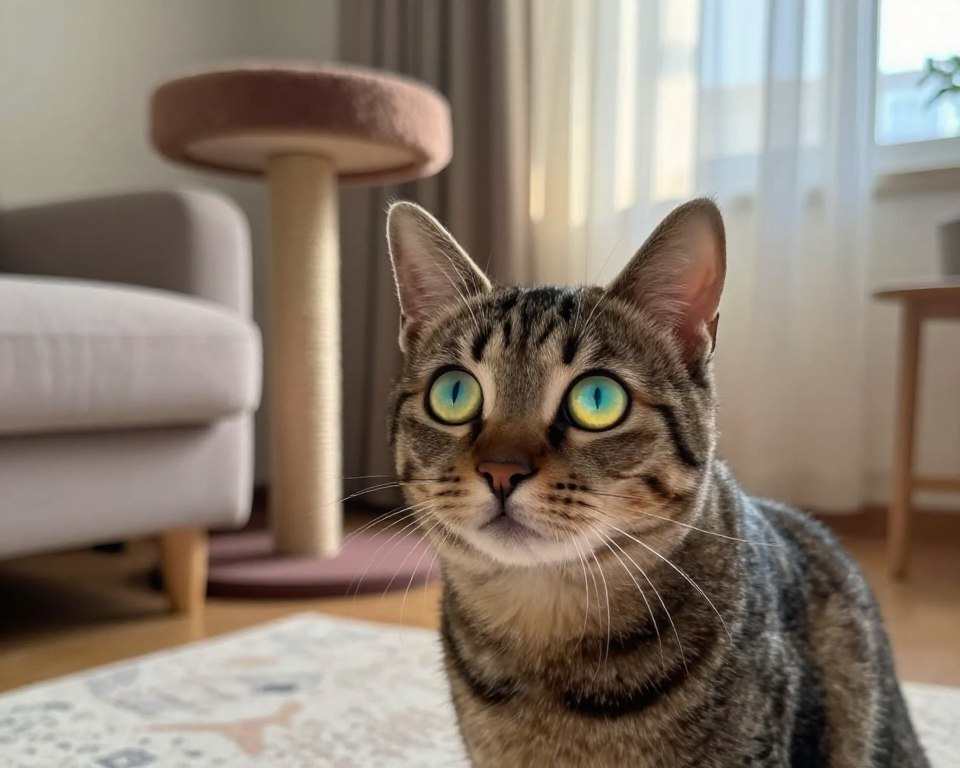
Did you ever stop to think about how your cats see the world? Cats, unlike us, aren’t viewing in technicolor and poster-quality high definition. What colors can cats see? They actually have a very pronounced visual capability, which has evolved for predatory purposes.
A cat’s eye structure is formulated for low light environments and provides a competitive edge hunting in the early morning and after dark. Yet this specialisation does interfere with their feline colour vision. Knowing what your cat can see will help you build an environment that is more comfortable and stimulating for them.
Click On Read: – Can Cats Eat Bananas
Key Takeaways
Read on to learn how humans and cats see colors differently!
RELATIVE COLORS Cats have only partial color vision compared to humans.
Their eyes are keen to low-light visibility.
Knowing how cats see can enrich your pet’s surroundings.
The structure of the cat eye is not like that found in humans and other prey animals.
Feline color vision is unlike human color vision.
The Science Behind Feline Vision
To know how cats see the world around them, one must first understand their visual system. The eye is an intricate organ and that of the cat has many specializations to give them their characteristic vision.
Anatomy of a Cat’s Eye
What colors can cats see? The eye of a cat is constructed differently than the human eye, featuring distinct anatomical characteristics that provide them with superior vision. The retina is covered in rods and cones, which are vital for sensing light and color.
Rods vs. Cones: Basic Units of Vision
Cats have more rods which are very sensitive to low levels of light and therefore work well in the dark. Cones, by contrast, are those responsible for color vision and are fewer in number than there are cone cells in our eyes.
The Tapetum Lucidum: Why Cats’ Eyes Glow
The tapetum lucidum is a layer behind the retina in a cat’s eye that reflects light back onto the retina, and helps cats see well in low light. Here’s why cat eyes tend to glow in the dark.
Night Vision Capabilities
Cats famously see in the dark far better than us. This is because they have more rods in their retina and a reflective tapetum lucidum.
Feature Comparison
| Feature | Cat Vision | Human Vision |
| Rods:Cones Ratio | High rod density | Lower rod density |
| Tapetum Lucidum | Present | Absent |
| Night Vision Capability | Excellent | Poor |
What Colors Can Cats See? The Real Deal on Cats and Color
Cats may not perceive the world in the same beautiful colors we do, but their vision is more nuanced than often assumed. We already know that cats see colors differently from us, so it turns out some shades are stronger in their eyes than others.
The Cat Color Spectrum
Though reduced compared to humans, the color range that cats can see has advantages for their role as hunters. Cats are believed to have dichromatic vision, which allows them to see the world mostly in yellows and blues.
Colors That Cats Can See Best
Cats are less sensitive to colors at the red end of the spectrum. These colors will more stand out to them and is helpful for hunting/ seeing things in their world. And of course, “cats can pick up blues and violets better than other colors,” so it’s understandable that they would pay more attentions to something or toy of this colour.
Reds and Pinks: The Colors Cats Have Trouble Seeing
However, cats may have a hard time differentiating between reds and pinks since these colors are beyond their mere color scope. This could make some toys or objects less noticeable to them, at least if those items don’t offer much contrast in brightness or motion.
The Myth of the Color Blind Cat
Contrary to popular belief, however, cats are not completely color blind. Though it’s true their vision doesn’t grant them the colorful world humans can experience, cats do see color much better than dogs. As one expert notes,
“Your cat’s color vision is basically limited, but it’s not 100% black and white,” she says “They really do see the world differently than we do.”
What colors can cats see? This borderline-color vision serves them well, as they are nocturnal hunters and thus have no need to tell a variety of colors apart; rather it is very important that they can perceive movement and changes in brightness.
Knowing the colors cats can see can help cat lovers and owners understand this unique world of sight that cats are living in. By knowing which colors cats see more easily, we can design their world to be infinitely better, and pick the toys they like the best.
Cat Vision vs. Human Vision: The Key Differences
When we dive into the contrasts between cat vs human vision, our connection to these furballs of love lets us appreciate their world with an entirely different eye. Humans are very visual creatures, which is why we put so much emphasis on acuity and colors, but since cats have evolved to be little killing machines, cat vision is something different entirely.
Field of View Comparison
Their field of vision is worldlier than ours, spanning nearly 200 degrees, rather than the mere 180 we can muster. His wider field of vision made it easier to spot movement—a big advantage for hunting.
Motion Detection Abilities
As for their capabilities Well, cats are more “attention-gathering creatures”, that’s the theory. Cats have a high sensitivity to detect motion as is necessary for prey capture. Their eyes are highly sensitive and can pick up the slightest movement, so they are good hunters.
Distance Perception and Depth
Cats are, however, good at detecting movement. They aren’t nearly as good as we are about judging distances. They also see very wide, but have a difficult time figuring out distance, especially near.
Visual Acuity and Sharpness
Humans see better and more clearly than cats do. Cats have lower visual acuity, which means they don’t see fine details as well as humans. Their vision is designed for low light environments, yet they are more easily seen in dark areas that the former.
Some of the most significant differences between cat vision and human vision are:
- Wider field of view for cats
- Enhanced motion detection in cats
- Better low-light vision in cats
- Sharper visual acuity in humans
Understanding these differences can also help us better appreciate how cats engage with their environment, and accommodate our homes and interactions to their distinct visual requirements.
How Your Home Looks Through a Cat’s Eyes
Knowing your cat’s perspective on your house can help you set up a more inviting, interesting place for them. Cats see and experience the world in their own unique way, and understanding that will improve your cat’s quality of life.
Household Items How They Look To Cats
What colors can cats see? Cats perceive the world in a quite differnt way, and our everyday items are no different. Since they can detect motion and see well in low lighting, objects with high contrast and that reflect light are especially fascinating to them. For example, a ball of yarn or laser pointer may be very appealing because it moves and reflects.
But it may not keep them as engaged with less- sensitive objects or those that are unmoving. Taking this into consideration can help you select toys and objects that are more likely to capture your cat’s attention.
Lighting Considerations for Cat-Friendly Spaces
Lighting is an important factor when it comes to your cat’s home. Cats like places with different lighting so they can regulate how they’re feeling. Bright lit up surroundings can be daunting, but the dim surroundings can provide comfort. A combination of both can give your cat the best of both worlds.
Also, warm-coloured light bulbs can help to produce a snug ambient and cool-toned lights tend to keep you more awake. Playing around with various lighting set ups will help you identify what looks best for your cat.
Reasons Cats Might Disregard Toys or Items
Some toys or objects may be dismissed by cats simply by not activating their visual or hunting instincts. Playthings that resemble prey or move in an erratic manner tend to be more interesting. Statics or items with little detail, on the other hand might not interest them at all.
You can also rotate toys to ensure your cat is always interested, novelty is huge when it comes to keeping cats entertained.
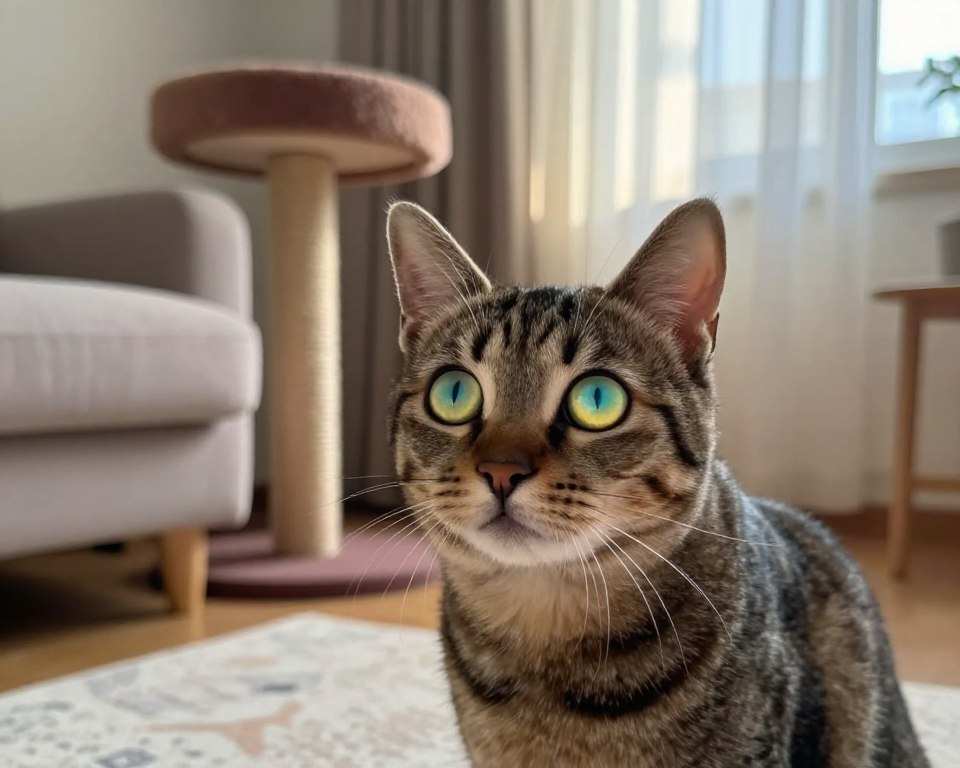
Cat-Safe Paint Selections for Your Home
Although cats do not perceive colors in quite the same way that humans can, some colors may still be more interesting to them than others. And yes, the color blue and green are said to be within their visual spectrum and can be used on toys or decor that will catch an infant’s eye.
In addition to making red and pink less distinguishable to cats, avoiding these colors can also make your home more cat-friendly. You can create a soothing environment for your cat by using a palette that incorporates calming colors such as light blue or green.
Color Visibility Table
| Color | Visibility to Cats | Usage in Home |
| Blue | High | Toys, bedding |
| Green | High | Plants, decor |
| Red | Low | Avoid in toys |
| Pink | Low | Avoid in decor |
Understanding Your Cat’s Visual World
It’s important to understand cat vision in order to make your home an enjoyable and comfortable place for your kitty. By understanding how cats see colors, movement and depth, you can customize your home to suit their vision.
Cats have different visual needs than people do such as the ability to see movement better, and function in low light conditions. Their visual world is one of muted tones, with blues and greens at the top end. These ideas will help you design a home that’s more conducive to your cat’s happiness.
Use toys and objects with high contrast colours or textures to make your cat’s vision more interesting. Make sure your home is well-lit, especially in the places where your cat spends much of its day. That way you create an interesting habitat that appeals to the way your cat sees the world.
Through understanding cat vision you can learn to better relate to your feline friend, and give them a living space that is comfortable, fun and interesting!
FAQ
What colors are cats most sensitive to?
Cats perceive blues and greens most clearly, as they have more cones that are sensitive to these colors.
Are cats color blind?
Cats aren’t fully color-blind, but they don’t see the same colorful world humans do. They can see colors, though not quite as coordinately or broadly as a human.
What do cats think about their home?
Cats see their home environment differently than humans do—just ask any cat—but, in general, they take in a broader visual field and are better at picking up on motion. They are looking at ordinary-haired objects around the house, but their eye sight and focus is different to that of ours.
Do cats see in the dark?
Cats cannot see in total darkness, however their night vision is much better than that of human beings because of the tapetum lucidum; a reflective layer behind the retina and can enhance vision in low light conditions.
How can I catify my space?
A comfortable environment for your cat could include, using a Cat-friendly color choice (light hues), proper light and positioning the toys & items that suits their vision and motion detection.
Why do my cats not play with toys or things?
Some toys or items could be overlooked by cats due to their limited colour vision, absence of movement or simply because the texture is unappealing to them.
How good a cat can see and how different is it from the vision of humans?
Cat sight is unlike human vision, with a broad field of view and good motion detection (but little ability to resolve fine detail). Unlike their daytime counterparts, cats are poorly adapted for binocular vision, which doesn’t hamper them when hunting.