Are you fed up with tangled, kinked, and leaky garden hoses that complicate the chore of watering your plants? Making the right garden hose selection will greatly improve your experience at home and in the garden.
Hose selection involves length, material, and durability. A good hose will ensure you spend your time watering your plants instead of walking back and forth to turn off and turn on the water.
You have many options, which can make deciding which hose is for you and your home garden needs seem overwhelming. The following will help you make the best selection for your home and garden.
Summary
- Learn to distinguish between the hoses suitable for home and garden use.
- Be mindful of the length and material of the hose for the best efficiency.
- Seek out optimum durability that promises neither kinked nor leaking hoses.
- Be sure to assess the existing watering system for compatibility.
- Consider the efficiency of the hose in relation to ease of storage and handling.
An Introduction to the Components of a Hose
As a sprinkler system or soaker hose to the in-ground hose, all garden and gardening improvement projects that an owner or devoted horticulturist will tackle will require the understanding of the basics of a garden hose. A garden hose serves as the primary and most used tool that enables one to spray water for the purposes of watering plants, washing floors, and a myriad of other functions and tasks.
The Quality of a Hose
The ability of a hose to perform its functions and tasks will be determined by the material and quality of a hose. For example, consider the following feedback from one hose company, “The ideal hose is rubber, flexible, and kink-resistant and will withstand very high pressure over a long period of time”. The characteristics of the ideal hose will lend a hose to have a very long usable life.
Click On Read: – Cuprinol Garden Shades
The Uses of A Hose
There are primary and simple effective functions of a garden hose and a few of these include the following:
- Watering of plants at the base of the plants thereby significantly reducing evaporation and water run off.
- Washing and cleaning outdoor floor surfaces and furniture of a garden or patio.
- Quick and simple filling of a water feature (pond or swimming pool etc.).
As an expert has pointed out, “A reliable hose is indispensable for maintaining a healthy and thriving garden.” If your gardening needs a hose, ensure that you choose a quality and durable one. It will make so much difference.
Different Types of Garden Hoses for Different Purposes
Every hose is made for a specific purpose. If you want to wash your patio, your car, or tend to your garden, there is a hose made for that use.
Vinyl and Rubber Hoses
Vinyl and rubber hoses are what most people use and are considered standard. If you weigh your options and look for a budget-friendly hose that you need for watering plants, go for a lightweight and easy to maneuver hose made of vinyl, but know that it’s not as durable then you have a good option. If you need a hose that is durable, flexible, and good for heavy-duty use you might want to look for a rubber hose.
Coiled and Expandable Hoses
If you are looking for a more modern option for an easy to store hose, consider getting an expandable hose, it will expand as it is filled with water then contract when it’s empty. A good option for not kinking is a coiled hose. These are made from a rubber-like durable, flexible material.
Soaker and Sprinkler Hoses
Soaker hoses gradually emit water for more efficient and effective watering of plants and flowers for gardens and landscaped areas. Sprinkler hoses have water dispersing sprinklers attached for wider and more diverse watering; they are more ideal for large gardens and for watering large areas of a lawn.
Flat and Drinking Water Safe Hoses
These types of hoses have many flat advantages; they are lightweight and easy to transport and compact for easy storage. For smaller gardening jobs, they are great. Drinking water safe hoses are made from safe materials for potable water, so your water source will be contamination free.
There are many types of hoses available for gardens and landscaping; you can choose a hose that will best fit your watering task needs.
Choosing the Right Hose Material
For making the hose purchase best fit your needs and requirements, having a good understanding of the different materials in garden hoses is an absolute necessity. This is because they directly impact the durability, flexibility, and overall performance of the hose.
Vinyl: Budget-friendly Options
Hoses made from vinyl are lightweight, so they are easy to move around with and are also budget-friendly, but the price also reflects on durability. They are more likely to kink, and overall be more fragile in comparison to other materials.
Rubber: Durability and Weather Resistance
One of the positive qualities of rubber hoses is their durability and resistance to extreme weather conditions which allow them to perform well even in harsh and cold climates as well as heavy usage.
Polyurethane: Lightweight Performance
Polyurethane hoses have the right balance of flexibility and durability. They are lightweight with high kink resistance and so are a common choice.
Reinforced and Hybrid Materials
Reinforced hoses with multiple layers including rubber and vinyl have greater durability. Hybrid materials incorporate the advantages of different materials to optimize their performance.
Choosing a hose should take into consideration the particular requirements of your garden or yard. Factors such as the type of weather conditions, frequency of usage, and level of desired overall durability should help you in making the choice.
Hose Length and Diameter: Finding Your Perfect Fit
Garden hose length and diameter is primarily important because it enhances your overall gardening experience. A hose that is either too short or too long or of the diameter that is too small or too big, leads to inefficiencies in watering and gardening work.
Measuring Your Yard for Ideal Length
In order to find the ideal length, measure the distance between the water source and the farthest point of your garden or yard. For optimum comfort to reach or stretch all areas, it is best to measure some extra feet to the distance of the hose. For its ease of use, and so that it does not kink or get tangled, it is best to not have the hose too long and be of excessive length.
Diameter Options and Water Flow Rates
The water flow rate is affected by the diameter of your garden hose, which ranges from 1/2 inch to 5/8 inch for common diameters. For larger gardens and tasks that require and benefit from a greater water flow rate, it is better to have a larger diameter hose.
Pressure Ratings for Different Applications
One of the most critical aspects of a hose is its ability to hold water pressure, which is illustrated by a pressure rating. Having a durable hose that does not shed easily is best for higher pressure water, and for the type of tasks that require greater pressure. For the typical gardening needs of a home, a hose pressure rating of around 150-200 PSI will suffice. However, If the gardening tasks are more demanding or for commercial gardening, a hose with a higher pressure rating will most likely be necessary.
| Hose Diameter | Water Flow Rate | Recommended Use |
| 1/2 inch | Low to Moderate | Small gardens, light watering tasks |
| 5/8 inch | Moderate to High | Medium to large gardens, general gardening |
| 3/4 inch | High | Large gardens, heavy-duty watering tasks |
Considering the hose length and diameter will ensure your gardening tasks could be completed more easily and with more efficiency.
Essential Garden Hose Features and Accessories
Knowing the essential features of a garden hose and the available accessories will maximize the benefits of your hose. The right features can really impact a hose’s performance and longevity.
Brass vs. Plastic Couplings
When it comes to couplings, garden hoses typically come with brass or plastic fittings. Brass couplings are known for their durability and corrosion resistance and are thus the more popular choice for gardeners. In contrast, plastic couplings are lighter and cheaper, but may not be as strong as brass.
| Coupling Material | Durability | Cost |
| Brass | High | Moderate to High |
| Plastic | Low to Moderate | Low to Moderate |
Anti-Kink Technology and Flexibility
The ‘Anti-kink technology’, helps keep hoses with this technology kink free and enables a steady flow of water. Such hoses are more flexible and are easier to move around in a yard.
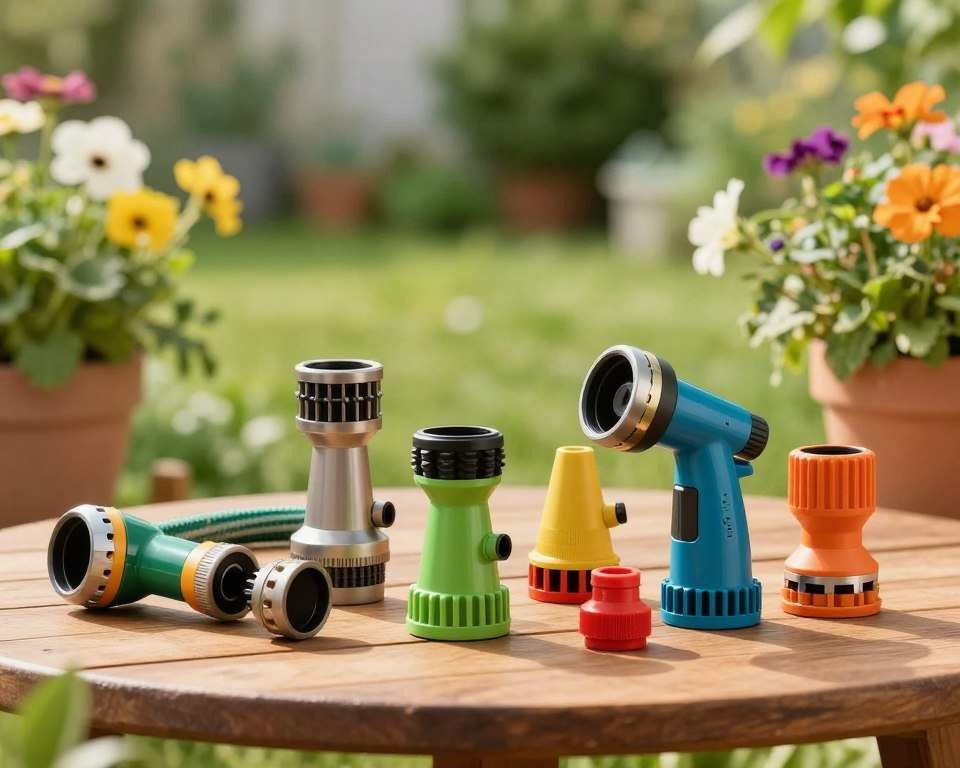
Nozzles, Sprayers, and Attachments
Specific nozzles and sprayers are vital accessories that may be placed at the end of a hose to adjust and regulate water flow and pressure. They come in various forms such as an adjustable nozzle and a sprayer that has multiple settings.
Storage Solutions and Hose Reels
To retain the quality of a garden hose, proper storage is paramount and with that hose reels are a great storage option as they help keep the hose neat and organized without causing tangles and kinks.
With the above cited important accessories and features, you should be able to pick a good hose that will help you fulfill your gardening dreams.
Safety and Health Considerations
Safety principles must be applied to the garden hose as to the material that is made of, and pressure/ temperature that can be withstood. If a garden hose has not considered these principles, it opens a potential Health concern as the water can be chemically contaminated.
Lead and Phthalate Free Options
Perhaps the most concerning health hazard is the presence of lead and phthalates in garden hoses. By checking the label of garden hoses, we can look for phthalate and lead-free certifications because those certifications typically indicate the absence of any harmful materials and water contamination is minimized.
UV Protection and Heat Resistance
Degradation of garden hoses due to sun exposure and high temperatures can result in the leaching of harmful chemicals. Hence, the presence of UV protection and heat resistance is crucial for the safe use of these hoses even after prolonged outdoor exposure.
Preventing Cross-Contamination
Appropriate use of hoses is vital to safety and, in particular, to the prevention of cross-contamination. In particular, this means not connecting the hose to any potable water supply without proper backflow prevention. By following these guidelines, the contamination of water supplies will also be avoided.
Focusing on these health and safety considerations will let you and your hose experience safe and healthy gardening.
Care for Your Hose to Get the Most Use of It
If you take care of your garden hose, you will get the most use of it possible. It takes small effort to have your hose in tip-top shape and use it to its potential.
End of the Season Care and Cleanup
Take the time once per hose season to clean your hose of dirt, debris, and mineral build up. These build up will promote damage to your hose in the long run. Take some detergent and warm water to fill a bucket and scrub the hose, thoroughly rinsing is essential.
Look for kinks, knots, and damage
Hose down and clean your nozzle and sprayer.
Thorough Draining and Proper Storage
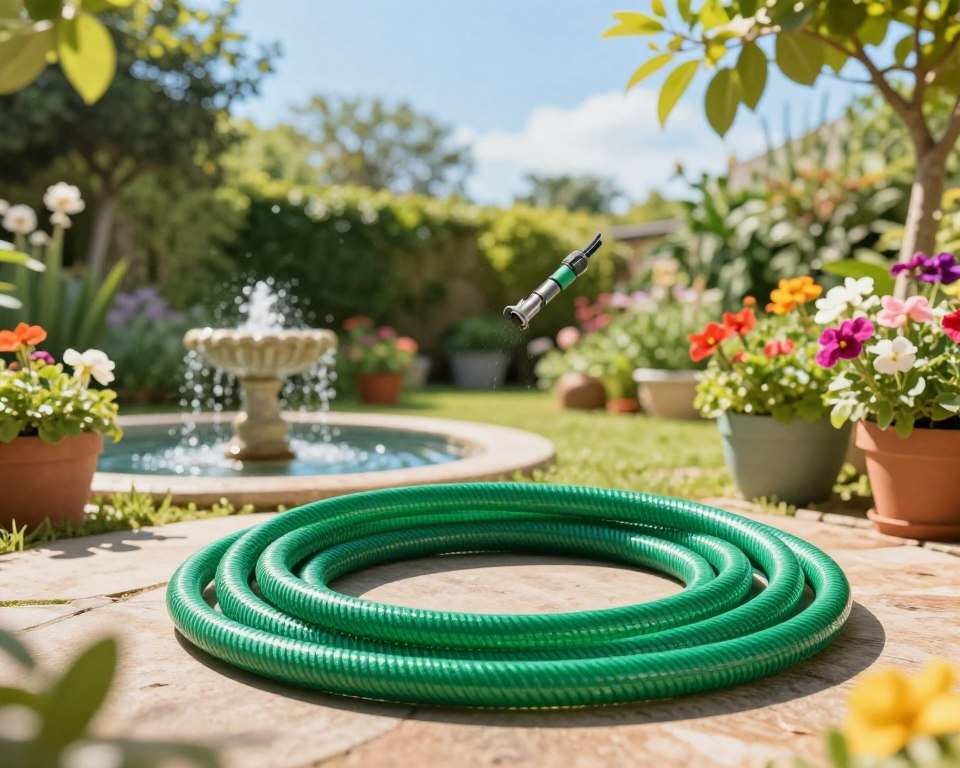
To keep your hose in great shape for your spring and summer gardening, it is best to store your hose in a dry and secure place. Once you are done for the day in your garden, fully drain your hose, and store it.
Fixing Hose Leaks and Faulty Connections
To repair, substitute, or fix damaged hose connections, regularly check hose for and repair sections that are worn down. Damaged hose connections will negatively impact your hose overall performance.
The process to fix leaks consists of:
- Recognizing where the leak is coming from
- Utilizing a hose repair kit to fix the damaged section
- Repair any damaged fittings
Conclusion: Making The Optimal Investment In A Garden Hose
The appropriate choice of a hose is very much a strategic selection. A hose is very much a strategic selection for homeowners and even gardeners. A quality hose is worth the investment as it helps in saving time and promotes maintenance of a good garden.
Finding the appropriate and efficient hose is possible by taking into account the material, length, diameter, along with the necessary attributes. In the hoses that can be looked at in the market there will be a hose that will be best in terms of a hose that can be easy to use, flexible and durable.
Investing in a hose that will meet garden goals will enhance the gardening experience for the user. A good hose will also promote efficient watering of plants, easy cleaning of the outdoors, and the quick achievement of various home maintenance tasks.
The time and effort will also be reduced by the selection of quality hose. It makes the hose a valuable tool for gardening and a worthwhile investment for the home garden.
FAQ
What is the best material for a garden hose?
It depends on your specific requirements. For example, rubber garden hoses are usually the most durable, but the best for winter storage are polyurethane hoses for their flexibility and lightweight. Vinyl hoses are cheaper but less durable.
How do I choose the right length for my garden hose?
How do I choose the right length for my garden hose? Determining the length of hose that best fits your needs is a simple task. Begin the process by measuring the straight-line distance from your water source to the most distant point that you want to reach. Take into consideration a hose that is long enough to reach all areas of your garden or yard and to cover any length you may need for additional tasks without being so long that it is cumbersome to work with.
What is the difference between a standard hose and an expandable hose?
A standard hose is just a regular hose that holds its diameter throughout its length and flow. An expandable hose, on the other hand, is a tube that expands its diameter when you fill it with water and then contracts to a short length when it has been drained and can be compacted for storage.
Can I use a hose for drinking water?
Most garden hoses are not drinking water safe. You need to check the product packaging to see if the hose is labeled as drinking water safe or lead free.
What should I do with my hose to help it last longer?
Make sure to clean and inspect the hose for any damage and leaks. Make sure to properly drain and store the hose after usage to avoid any damage.
What are the advantages of using hoses with anti-kink technology?
The biggest advantage of using these hoses is that they are easier to maneuver because they do not kink. This also prevents damage to the hoses.
What is the best way to store my hose in the winter?
You should drain the hose and coil it. Make sure to store it in a warm area like a garage to make sure the hose does not freeze.
What does a hose pressure rating mean?
The pressure rating is the maximum water pressure the hose is able to withstand. When choosing a hose, make sure the pressure rating is equal to the water source you are using.